
In 2026, Tamar AI brought its work in AI-native filmmaking to two of the world’s leading film festivals.
Earlier this year, Tamar AI was invited by the China Film Association to represent the Asian AIGC ecosystem at the Cannes Film Festival, where the company shared its perspective on AI, creativity, and the future of filmmaking with an international film audience.
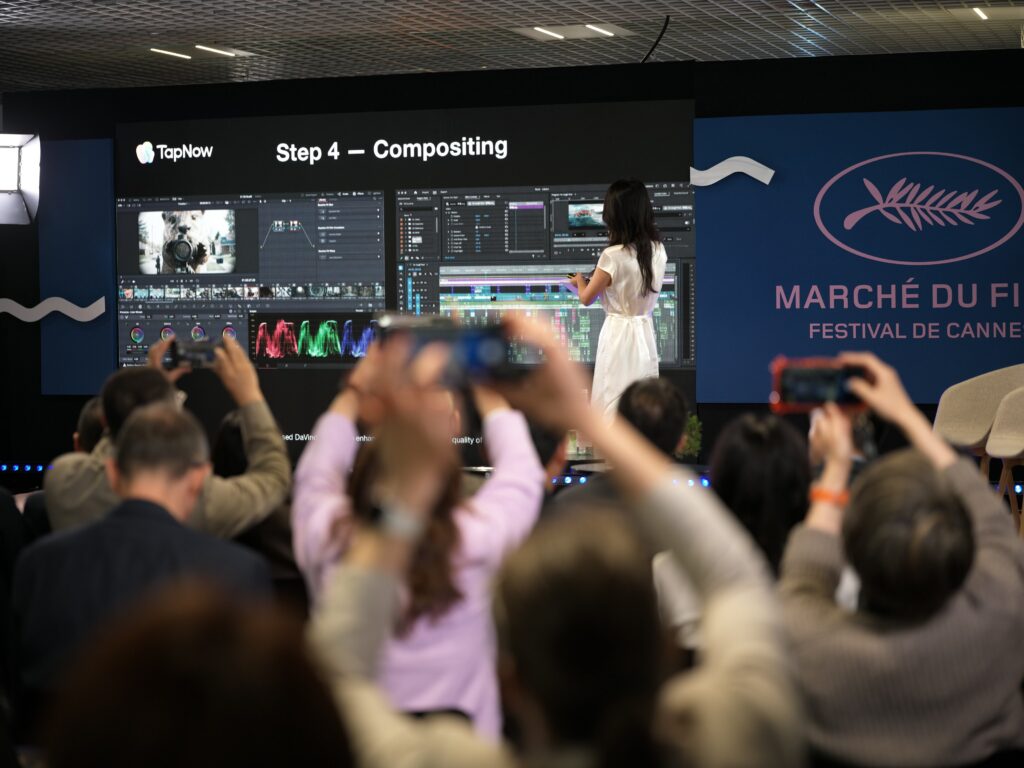
A few months later, Tamar AI returned to the European festival circuit—this time at the 83rd Venice International Film Festival, where its TapNow team hosted a dedicated AI × Cinema forum at Venice Production Bridge and presented a screening of AI-native works from its global creator community.
The two festivals marked two different moments for Tamar AI: from being invited to share an emerging creative ecosystem, to bringing creators, works, and industry conversations directly into the film festival environment.
AI × Cinema at Venice Production Bridge
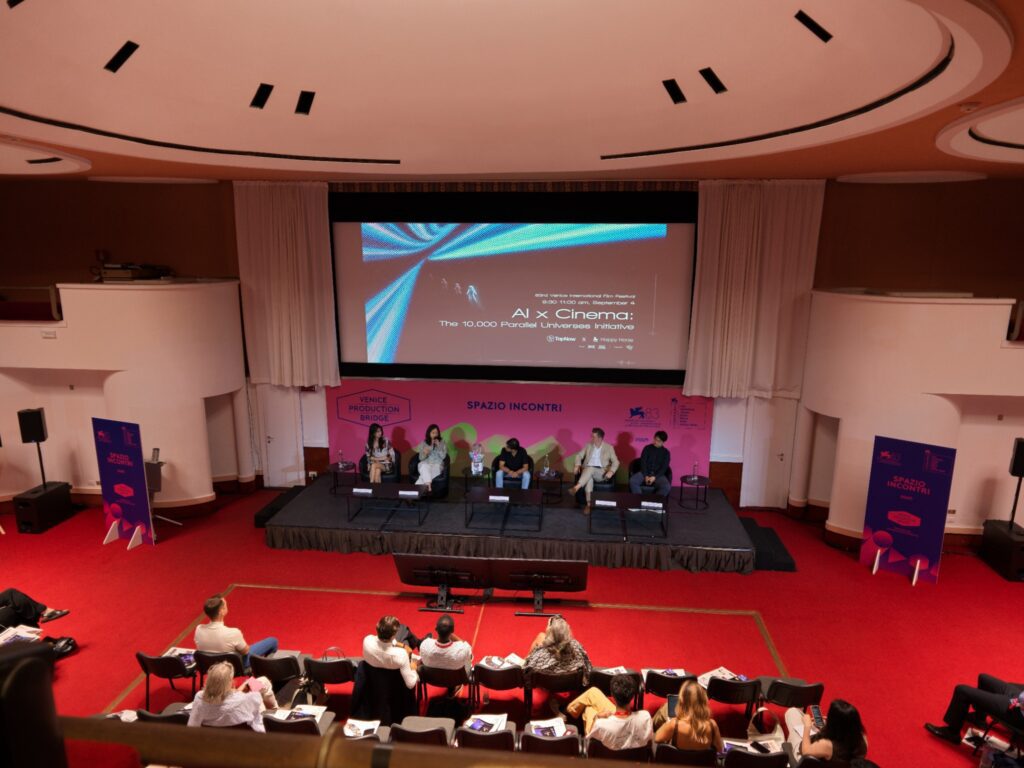
On September 4, Tamar AI’s TapNow hosted “AI x Cinema: The 10,000 Parallel Universes Initiative” at Venice Production Bridge.
The forum brought together filmmakers, film educators, AI researchers, and creative technology leaders to discuss how AI is entering filmmaking—not only as a production technology, but as a new part of the creative process.
The conversation covered film education, creative authorship, AI filmmaking, music and sound, production workflows, and the economics of emerging forms of filmmaking.
One question came up repeatedly: as the tools for making films change, what remains uniquely human in the creative process?
“AI is not a shortcut to becoming a filmmaker. You still have to do the work,” said Barry Dignam, Vice Dean of FilmEU at IADT and Chair of the CILECT European chapter.
Shawn Song, AI music and sound researcher and Co-founder and CEO of Sonilo, spoke about another part of the creative process that technology cannot replace:
“Building your own taste takes a lifetime of training and experience. AI cannot do that for you.”
The forum also featured a technical presentation of Primodia, a flagship project from Tamar AI’s 10,000 Parallel Universes initiative, showing how an AI-native project moves from concept and visual development through production.
Bringing AI-native works to the screen
On September 7, Tamar AI presented a curated screening of selected works from 10,000 Parallel Universes at the Venice Film Festival.
The screening brought together creators and stories from different cultural and geographic backgrounds, including North America, Iran, Brazil, and Asia.
For the creators, it was an opportunity to bring their work into a professional film festival environment and meet filmmakers, educators, industry professionals, and audiences from across Europe.
For Tamar AI, the screening also represented the purpose of 10,000 Parallel Universes: to discover creators with distinctive voices, develop original IP, and create opportunities for their work to reach audiences beyond their original markets.
Different creators. Different stories. One screen.
Introducing Glanze
During the Venice Film Festival, Tamar AI also introduced Glanze, a new platform for original AI-native series, films, and explorable worlds.
Glanze and TapNow are two parallel product lines within Tamar AI.
TapNow focuses on the creative process, providing an AI-native environment for creators to develop and produce their work.
Glanze focuses on the audience side, giving original AI-native stories and worlds a place to be discovered and experienced.
The platform launched with more than 40 titles available for preview, including works developed through 10,000 Parallel Universes.
Together with 10,000 Parallel Universes, the three initiatives represent different stages of Tamar AI’s work around AI-native content: creating, discovering, and reaching audiences.
A creator-first approach to AI filmmaking
Across Cannes and Venice, the focus was not only on what AI can do, but on what creators can do with it.
AI can lower the technical barriers to filmmaking. It can allow a small team—or an individual creator—to explore visual ideas, prototype worlds, and develop projects that previously required much larger production resources.
But the creative decisions remain with the creator.
What story is worth telling.
What a character should feel like.
What an image should look like.
What to keep, what to change, and what to leave behind.
These are questions of taste, experience, and authorship.
That is why Tamar AI’s approach begins with creators rather than technology: building tools, programs, and platforms that give creators more room to make, develop, and share their work.
From Cannes to Venice
Cannes offered an opportunity to introduce the Asian AIGC ecosystem to an international film audience.
Venice offered a different opportunity: to bring AI-native creators, works, and industry conversations directly into the festival environment.
Together, they reflect a broader shift underway in filmmaking.
AI is becoming part of the production process. New creators are experimenting with forms that were previously difficult to produce. And film festivals are becoming places where these new forms can be discussed, tested, and seen.
For Tamar AI, this is only the beginning.